
 Image 1 of 4
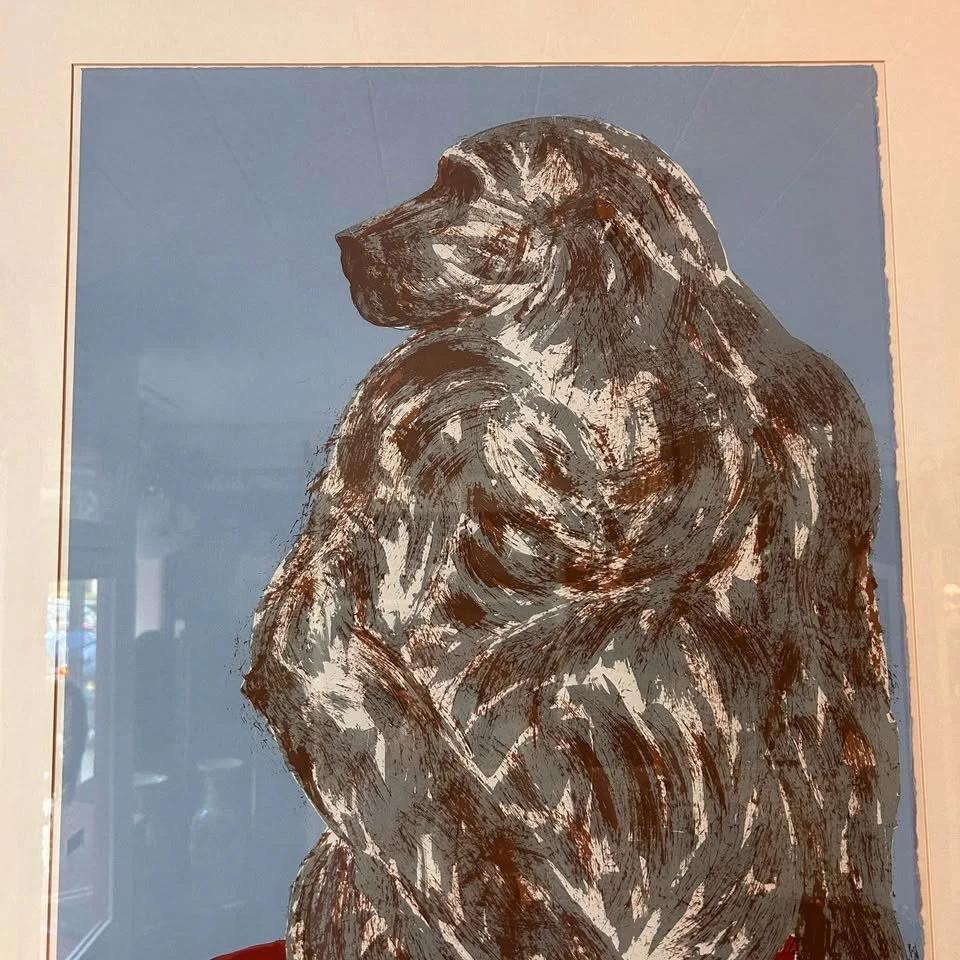 Image 2 of 4
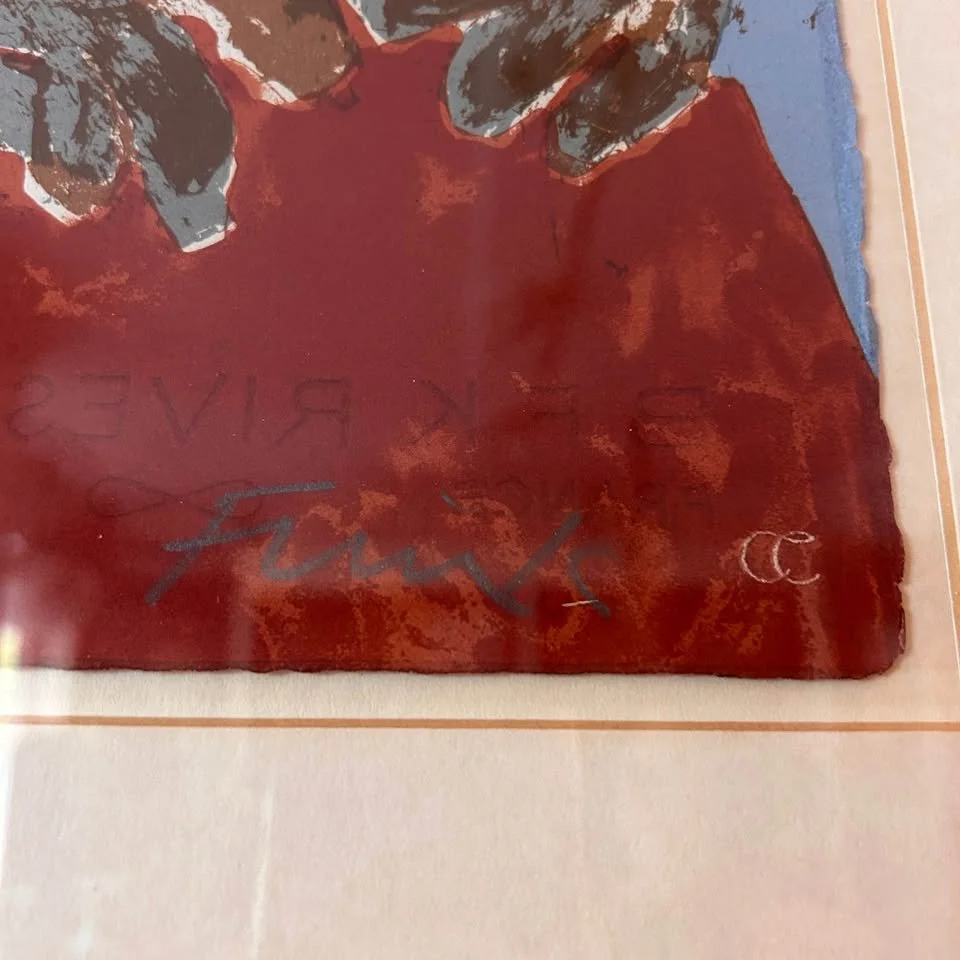 Image 3 of 4
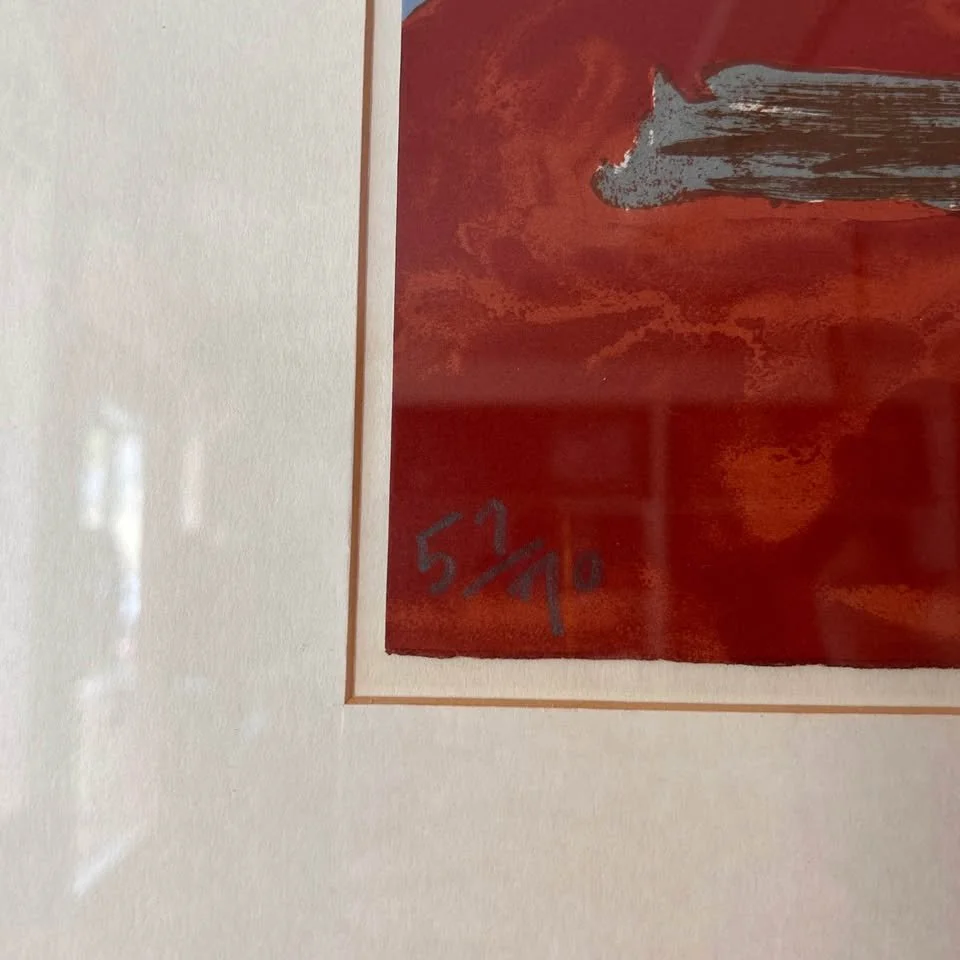 Image 4 of 4
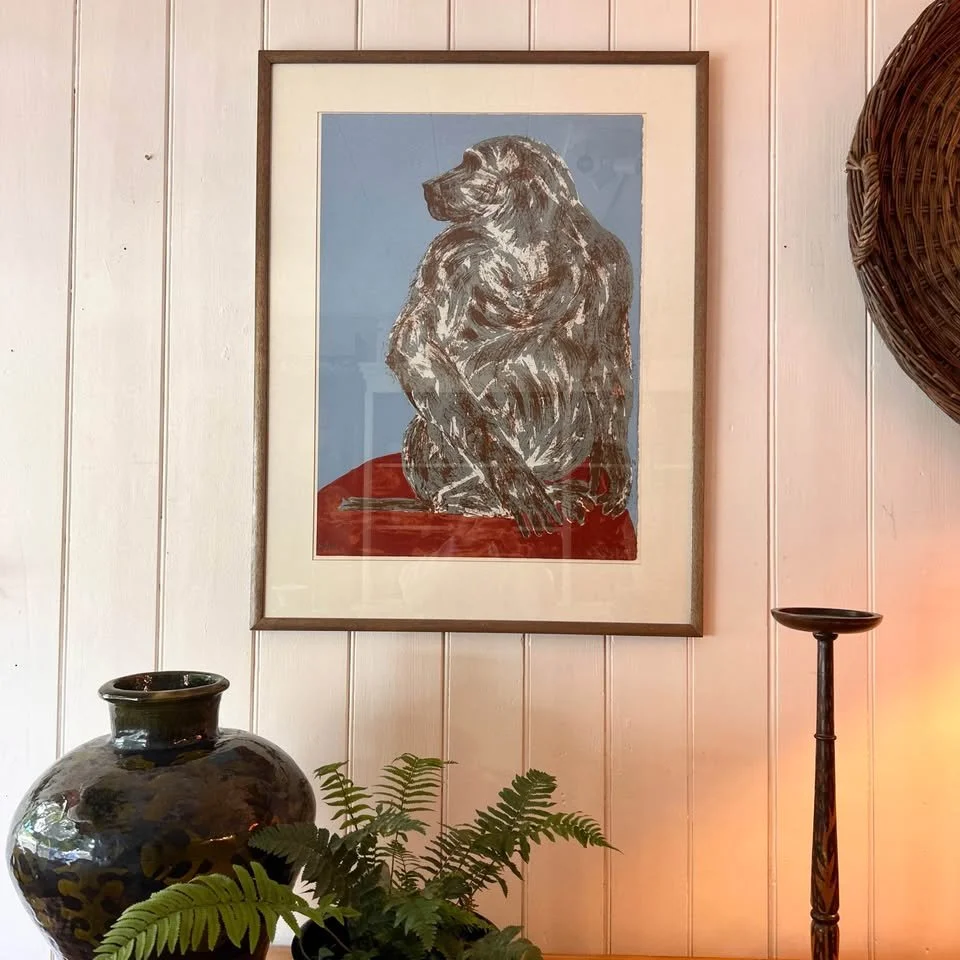
Elisabeth Frink R.A. (1930-1993) ‘Baboon’, coloured screenprint signed and numbered by artist
The image depicts a stylized baboon in profile, sitting on a red surface.
Screenprint in colours, 1990, on BFK Rives, signed and numbered 51/70 in pencil, printed by Curwen Chilford Prints, Cambridge, co-published by Curwen Chilford Prints and the artist, with the printer's blindstamp, the full sheet printed to the edges.
Born in 1930, Elisabeth Frink was a British sculptor whose work examined the strength and vulnerability within both humanity and nature. Frink’s father served as an officer in the Royal Dragoon Guards, and she spent her childhood near a Royal Air Force base in Suffolk.
Frink was only nine years old when World War II broke out and the horrors of the war had a lasting impact on her artwork. Between 1947 and 1953, she studied at the Guildford School of Art and the Chelsea School of Art, with her tutors including Bernard Meadows and Willi Soukop. Here, Frink started to make plaster sculptures of men and animals, which she later described as ‘very strange sort of gothic, apocryphal figures, very gloomy’. One of these sculptures, Bird, became Frink’s first major success and was bought by the Tate when she was only 22 years old.
She emerged as part of the post-war British sculptural movement known as Geometry of Fear — a term coined by critic Herbert Read for the sculptors whose work reflected the anxieties of a post-war world. Alongside these figures, Frink was well-known for her sculptures of animals, particularly birds and horses. She credited her upbringing in the countryside for giving her a love of wildlife. As with her male figures, Frink’s animal sculptures explored the uneasy tension between predator and prey.
Frink’s sculptures are found across the UK and beyond, from Warhorse (1991) at Chatsworth House in Derbyshire, to the Eagle Lectern (1962) at Coventry Cathedral. The Eagle Lectern was cast in an edition of five, with one of the five purchased for President John F. Kennedy's Memorial in Dallas, Texas in 1964, and a second was sold at Christie’s in November 2018 for £440,750.
Frink’s final piece was the Risen Christ at Liverpool Cathedral, installed just before her death in 1993. S
Elisabeth Frink R.A. (1930-1993) ‘Baboon’, coloured screenprint signed and numbered by artist
The image depicts a stylized baboon in profile, sitting on a red surface.
Screenprint in colours, 1990, on BFK Rives, signed and numbered 51/70 in pencil, printed by Curwen Chilford Prints, Cambridge, co-published by Curwen Chilford Prints and the artist, with the printer's blindstamp, the full sheet printed to the edges.
Born in 1930, Elisabeth Frink was a British sculptor whose work examined the strength and vulnerability within both humanity and nature. Frink’s father served as an officer in the Royal Dragoon Guards, and she spent her childhood near a Royal Air Force base in Suffolk.
Frink was only nine years old when World War II broke out and the horrors of the war had a lasting impact on her artwork. Between 1947 and 1953, she studied at the Guildford School of Art and the Chelsea School of Art, with her tutors including Bernard Meadows and Willi Soukop. Here, Frink started to make plaster sculptures of men and animals, which she later described as ‘very strange sort of gothic, apocryphal figures, very gloomy’. One of these sculptures, Bird, became Frink’s first major success and was bought by the Tate when she was only 22 years old.
She emerged as part of the post-war British sculptural movement known as Geometry of Fear — a term coined by critic Herbert Read for the sculptors whose work reflected the anxieties of a post-war world. Alongside these figures, Frink was well-known for her sculptures of animals, particularly birds and horses. She credited her upbringing in the countryside for giving her a love of wildlife. As with her male figures, Frink’s animal sculptures explored the uneasy tension between predator and prey.
Frink’s sculptures are found across the UK and beyond, from Warhorse (1991) at Chatsworth House in Derbyshire, to the Eagle Lectern (1962) at Coventry Cathedral. The Eagle Lectern was cast in an edition of five, with one of the five purchased for President John F. Kennedy's Memorial in Dallas, Texas in 1964, and a second was sold at Christie’s in November 2018 for £440,750.
Frink’s final piece was the Risen Christ at Liverpool Cathedral, installed just before her death in 1993. S